
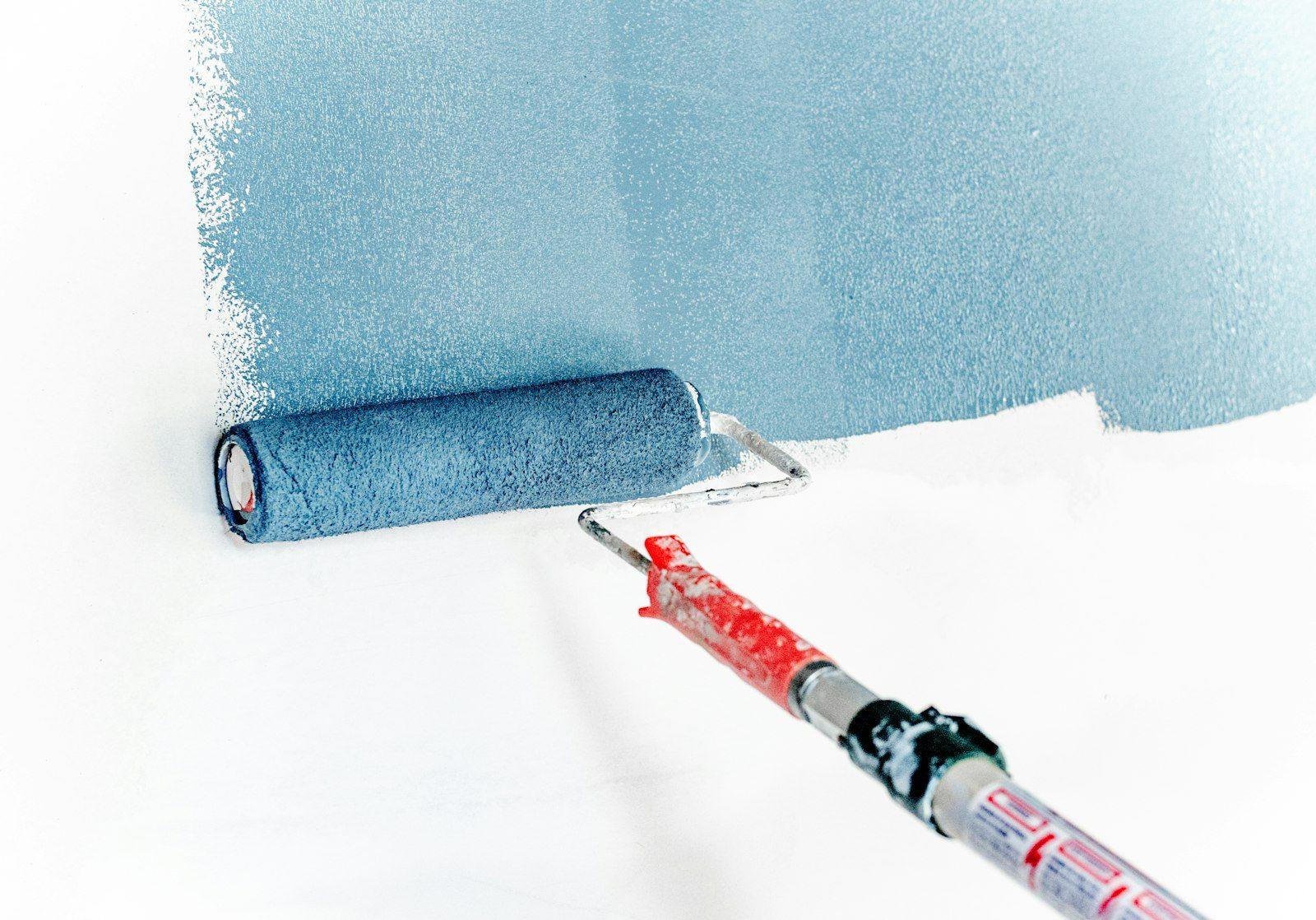
Chrome Oxide Green in Coatings: Redefining Performance and Innovation
Chrome oxide green — C.I. Pigment Green 17 — is the reference pigment wherever a coating must survive decades outdoors. Its lightfastness of 8/8 and weatherfastness of 5/5 mean a well-formulated film keeps its hue for the full service life of the structure, with no chalking and no drift towards grey.
Why Pigment Green 17 outlasts organics
Organic greens rely on complex chromophores that degrade under UV. Cr₂O₃ is an inorganic corundum-type oxide: the colour arises from d-d electronic transitions of Cr(III) in an octahedral lattice — a structure that sunlight simply cannot break. Combined with chemical inertness against acids, alkalis, SO₂ and industrial atmospheres, it is the default choice for coil coatings, marine paints and architectural facades.
NIR reflective and camouflage systems
The NIR grade GREEN 1030 reflects near-infrared radiation while keeping the visual green, cutting roof-surface temperatures and cooling energy demand. The same physics serves military camouflage: Cr₂O₃ is the primary green in IR-matched camouflage coatings because its spectral reflectance tracks foliage across the visible-to-NIR window.
Formulation benchmarks
Full shade is evaluated in a 1:1 alkyd resin / melamine system and tint shade at 1:10 TiO₂. Micronized grades disperse fast with no aggregates, and low oil absorption keeps gloss high. For demanding projects we recommend the micropowder line for deep greens with maximum hiding.
CONTINUE READING
Grade selection for coating types
| Coating system | Key demand | Recommended DELIKECOLORS grade | Why |
|---|---|---|---|
| Water-based architectural | Easy dispersion, tinting | GREEN 1001 (D50 1.2–2 μm) | Balanced hue, reliable ΔE |
| Solvent industrial enamel | Colour strength, gloss | GREEN 1025 micronized | Sub-micron fines, high tinting strength |
| Coil / stoving coatings | Heat stability | GREEN 1025 / 1061 | Stable above bake temperatures |
| Powder coatings | Extrusion mixing, weather | GREEN 1020 Standard™ | Economical, excellent weathering |
| Anti-corrosion primers | Barrier, alkali stability | GREEN 1000 | Inert in aggressive pH environments |
The coating industry asks one question of every green pigment and rarely hears an honest answer: what will this cost me per year of facade, not per kilo? Chromium oxide answers that question better than any colourant on earth, but only if the grade matches the system. We have watched formulators force a micronized grade through a low-shear architectural line and wonder why dispersion time doubled — then force a coarse grade into a high-chroma enamel and wonder why tinting strength collapsed. Match the D50 to the shear, and chromium oxide quietly becomes the cheapest green in the building.
Where the coating will actually live
Every coating specification starts with a place: a marine terminal in salt spray, a coil line curing at 260 °C, a facade facing equatorial sun, a tank farm breathing acid fumes. Chrome oxide green is chosen because it is indifferent to all of these. Lightfastness 8/8 means the full shade loses nothing measurable in decades of sunlight; weatherfastness 5/5 means the film keeps its green through rain, frost and industrial atmospheres; chemical inertness means acid rain and SO₂ do not touch it. Formulators do not buy Cr₂O₃ for the day one colour — any green delivers that. They buy it because day 3 650 looks like day one.
Formulation benchmarks that actually matter
Full shade is evaluated in a 1:1 alkyd/melamine system, tint shade at 1:10 TiO₂ — the standard conventions. In practice: oil absorption around 20–25 g/100 g keeps gloss high at high loading; density 5.21 g/cm³ makes Cr₂O₃ one of the heaviest pigments in the can, so specify by pigment volume concentration (PVC), not weight; and micronized grades (D50 ≤ 0.5 μm) disperse in a single bead-mill pass. Typical loadings run 3–12 % on total formulation weight for pastel architectural shades, 15–30 % for full greens and industrial finishes. Heavy-metal-free reformulation — replacing lead chrome green — is usually a drop-in at comparable PVC with better hiding.
| PARAMETER | TYPICAL Cr₂O₃ VALUE | WHAT IT MEANS IN THE CAN |
|---|---|---|
| Oil absorption | 20–25 g/100 g | high-gloss capability at high loading |
| Density | 5.21 g/cm³ | formulate by PVC; control settling |
| pH (10 % slurry) | 6–8 | compatible with standard dispersants |
| D50 | 1–2 μm (std) / ≤0.5 μm (micronized) | dispersion time and tint strength |
| Cr(VI) content | ≤10 ppm / ND (micronized) | regulatory headroom |
The lead-free green transition, quantified
Lead chrome greens still appear in some industrial markets, but the direction of regulation is one-way: REACH restrictions, EU RoHS, China GB 18666 and regional lead bans are closing the loopholes year by year. Cr₂O₃ is the proven drop-in replacement, and the switch is usually painless: comparable hiding at similar PVC, no catalyst poisoning, no bleed, and a pigment that survives powder-coating bake cycles at 200 °C plus coil-line cure at 240–280 °C without a colour shift. The reformulation checklist: rebalance PVC for the higher density, confirm the tinting system (Cr₂O₃ tints cooler than lead chrome), and re-qualify the corrosion package — the oxide itself is inert, but any new pigment changes the film's barrier balance and needs a fresh salt-spray run.
The cheapest day to switch from lead chrome green to Cr₂O₃ is the day before your customer's audit. The second-cheapest is the day after. Reformulate once, on your schedule, and stop pricing in regulatory risk.
Dispersion, tinting and the micronized question
Cr₂O₃ grinds readily but rewards discipline. Start the wetting stage slowly under shear to avoid floating powder; a high-speed dissolver plus a single bead-mill pass takes micronized grades to full strength, while standard grades want two to four passes with 0.8–1.2 mm zirconia beads. Tinting behaviour is the formulation's quiet risk: Cr₂O₃ undertone runs cooler and greyer than a phthalo green, so a tint line built on organics will not reproduce an oxide standard — plan the tinting bases around the oxide if the customer's green is an oxide green. The micronized premium is usually self-financing: halved dispersion time, higher gloss, better tint strength and no speck complaints, for a price uplift smaller than one hour of mill time on a production line that is paid by throughput.
Colour space and batch consistency
The product line spans a deliberate hue ladder: yellow-shade grades (GREEN 1025/1061/1062) read warm and bright in pastel tints; blue-shade grades (GREEN 1002/1071/1072/1073) read deep and cool in full shade; GREEN 1000 sits as the vivid reference green and 1001 as the balanced mid. Batch-to-batch colour is controlled to ΔE ≤ 1.0 against the registered standard, with per-lot CoA values for L*, a*, b* shipped with every container. For specifiers that means the reformulation risk is minimal: pick the grade by hue angle, confirm in your own binder at full and tint shade, and the next lot lands within tolerance — a discipline organic suppliers can rarely match and lead-chrome suppliers never had to.
Application map: where each grade earns its keep
Architectural masonry and exterior wall paints take GREEN 1000/1001 standard grades: maximum lightfastness where repainting is scaffolding. Industrial and machinery finishes take the micronized MicroPowder™ grades: gloss, hiding and fast dispersion in production schedules. Coil coatings and powder coatings need the same micronized logic plus bake-cycle colour stability — both cure above 200 °C where organics degrade and Cr₂O₃ simply sits. Marine and anti-corrosion systems use the oxide for its chemical inertness inside zinc-rich and epoxy primers. Camouflage systems use the NIR grades (GREEN 1030/1031) whose reflectance tracks foliage in the near infrared. Each application has a grade; buying the family instead of a single SKU is how formulators keep every new project one drawdown away from an answer.
Coatings buyers over-optimise price and under-optimise the two things that actually cost money: mill time and repaints. The grade that saves an hour per batch or one repaint per decade is the cheapest pigment on the invoice.
Quality assurance: what a coating maker should demand
Before the first container arrives, agree the acceptance protocol: Lab values against the registered standard at full and tint shade (ΔE ≤ 1.0), D50 by laser diffraction, Cr(VI) by named extraction method, water-soluble salts, and sieve residue on 45 μm. Then demand the per-lot CoA carries exactly those numbers — a certificate that only repeats the datasheet is marketing. Inspect on receipt with a simple three-point check: a tint drawdown against your retained standard, a pH check of a 10 % slurry, and a sieve wash. These take an hour, catch most surprises, and create the retained-sample chain that makes any later dispute resolvable in days instead of months. Suppliers that welcome your incoming QC — and ours does — are the ones whose process you can actually qualify.
NIR grades: the coating niche that pays twice
Cool-roof and camouflage markets are where Cr₂O₃ stops being a colour and becomes a function. The NIR Colors™ grades reflect 43–55 % in the 780–2500 nm window while staying visually green — cutting roof surface temperature by 10–25 °C, air-conditioning load by 10–20 %, and membrane ageing in proportion. The same physics serves military camouflage: foliage reflects strongly in the NIR, and a coating whose pigment matches that reflectance keeps its signature when viewed through night-vision equipment. Specifying NIR grades requires the reflectance curve with the wavelength range and standard stated — a single "NIR %" without the method is meaningless, and our curves are published for GREEN 1030, 1031 and 1001. This is the rare market where the pigment genuinely changes the energy bill and the mission profile at once.
A coating is a promise about the future — colour in ten years, protection in salt, reflectance under sun. Chrome oxide green is how you underwrite that promise with a material that has already kept it since 1794.
Frequently asked coating questions
Does Cr₂O₃ affect gloss? With correct dispersion and oil absorption around 20–25 g/100 g, full-gloss industrial finishes are routine; micronized grades are preferred for high-gloss work. Is it compatible with other pigments? Yes — it is inert and non-catalytic; it blends cleanly with TiO₂, iron oxides and most organics. Can it replace lead chrome green in existing formulas? Usually as a near drop-in: rebalance for the higher density, re-check tint undertone, re-run salt spray. Does it work in waterborne systems? Yes — pH 6–8 and low soluble salts make it straightforward in acrylics and polyurethanes with standard dispersants. What about food-contact and toy coatings? Cr(III) stability, no migration and regulatory approval make it the standard green where durability plus compliance are both required; verify your specific end-use rule as always.
Formulate once for the worst day of the coating's life — the tenth summer, the salt fog, the bake cycle — and every ordinary day takes care of itself. That is the whole philosophy in one grade choice.