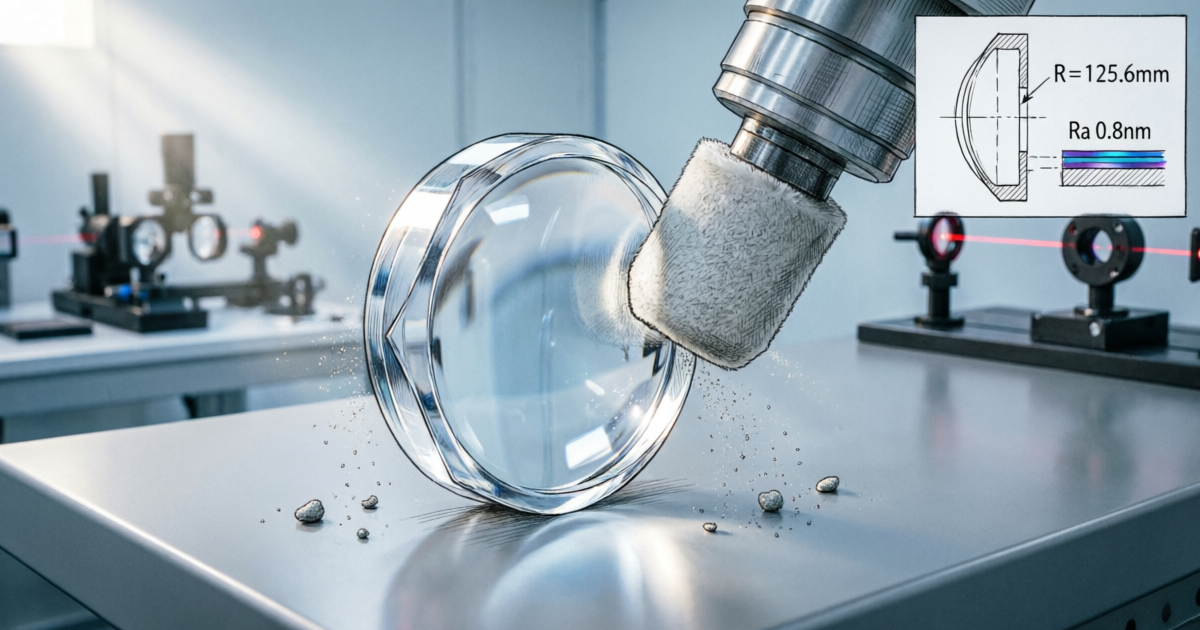
chromium oxide green in Precision optics Manufacturing: Achieving Sub-Wavelength surface finish
Introduction
The precision optics industry faces an unprecedented challenge: creating optical surfaces with finish specifications measured in fractions of a wavelength of light. For visible light (approximately 500 nanometers), this means achieving surface roughness below 10 nanometers. For infrared applications, the requirements are even more stringent. chromium oxide green has emerged as a critical material in this domain, enabling optical manufacturers to produce lenses, mirrors, and optical components that define the performance of modern imaging systems, scientific instruments, and defense applications.
The Optical surface finish Challenge
Optical surfaces must meet specifications that go far beyond simple smoothness. The surface finish directly impacts:
Optical Transmission: Surface roughness causes light scattering. For a lens with 1% surface roughness (Ra = 5 nm), approximately 2-3% of incident light is scattered rather than transmitted. This directly reduces image contrast and brightness.
Aberration Control: Microscopic surface irregularities act as tiny lenses, introducing optical aberrations. For high-precision applications like astronomical telescopes or lithography systems, these aberrations must be controlled to sub-nanometer levels.
Coating Adhesion: Anti-reflection coatings and other optical coatings adhere better to smoother surfaces. Poor surface finish leads to coating delamination and reduced coating performance.
Durability: Rough surfaces are more susceptible to environmental degradation, dust accumulation, and mechanical damage.
Traditional polishing methods using cerium oxide or aluminum oxide can achieve surface roughness of 5-10 nm Ra, but they often leave subsurface damage and require extensive post-polishing inspection and rework. chromium oxide green offers a fundamentally different approach.
The Physics of chromium oxide green polishing in optics
chromium oxide green’s application in precision optics differs significantly from its use in semiconductors. While semiconductor polishing prioritizes material removal rate and selectivity, optical polishing prioritizes surface quality and minimal subsurface damage.
Particle Size and Shape: For optical applications, chromium oxide green particles are typically 0.5-5 micrometers in size, significantly larger than semiconductor-grade particles. However, the particle shape is carefully controlled. Spherical particles produce more uniform polishing and fewer surface defects than irregular particles.
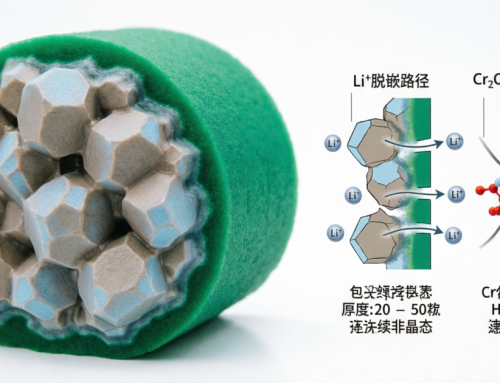
The polishing mechanism involves:
1. Mechanical Abrasion: The chromium oxide green particle removes material through mechanical cutting action.
2. Chemical Assistance: The polishing compound contains mild chemical agents that soften the surface layer, reducing the force required for material removal.
3. Thermal Effects: Friction generates heat, which can slightly soften the optical material (glass, fused silica, or crystal), facilitating material removal.
The combination of these mechanisms produces a smooth, damage-free surface.
Real-World Application: Precision Lens Manufacturing
Consider the manufacturing of a high-precision lens for a space telescope. The lens must meet the following specifications:
– Surface roughness: Ra < 2 nm - Subsurface damage: < 1 micrometer - Wavefront error: < λ/20 (approximately 25 nm for visible light) - Diameter: 300 mm - Material: Fused silica
The manufacturing process involves multiple polishing stages:
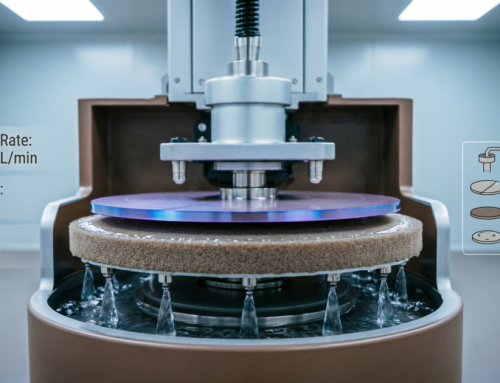
Stage 1: Rough polishing
Using a chromium oxide green slurry with 5-10 micrometer particles, the lens is polished to remove grinding marks and achieve initial shape. polishing rate: 10-20 micrometers per minute. Surface roughness after this stage: Ra ≈ 50-100 nm.
Stage 2: Fine polishing
A finer chromium oxide green slurry (2-5 micrometer particles) refines the surface. polishing rate: 2-5 micrometers per minute. Surface roughness: Ra ≈ 10-20 nm. Subsurface damage begins to be removed.
Stage 3: Ultra-Fine polishing
Using chromium oxide green particles of 0.5-2 micrometers, the final surface finish is achieved. polishing rate: 0.5-1 micrometer per minute. Surface roughness: Ra < 2 nm. Subsurface damage is essentially eliminated.
Stage 4: Precision Finishing
For critical applications, a final polishing step using chromium oxide green in a specialized compound may be performed. This step removes any remaining subsurface damage and achieves the final wavefront specification.
The entire process, from rough polishing to final finish, may take 20-40 hours for a 300mm lens, depending on the initial surface condition and final specifications.
Advantages Over Alternative Materials
Cerium Oxide: While cerium oxide is commonly used in optical polishing, it has several limitations:
– Produces more subsurface damage than chromium oxide green
– Requires more aggressive polishing parameters
– Leaves residual cerium oxide particles that must be carefully cleaned
– More expensive than chromium oxide green
Aluminum Oxide: Aluminum oxide is harder than chromium oxide green but produces:
– More surface scratches and defects
– Greater subsurface damage
– Requires more frequent tool dressing
– Higher polishing forces, which can introduce stress in the optical material
chromium oxide green: Offers the optimal balance:
– Minimal subsurface damage
– Smooth, defect-free surfaces
– Lower polishing forces
– Easier to clean from the optical surface
– Cost-effective for high-volume production
Advanced Applications in Precision optics
Aspheric Lens polishing: Modern optical systems increasingly use aspheric lenses to reduce aberrations and system complexity. polishing aspheric surfaces is more challenging than polishing spherical surfaces because the polishing tool must follow a complex three-dimensional path. chromium oxide green enables precise control of the polishing process, allowing manufacturers to achieve the tight surface finish specifications required for aspheric lenses.
Mirror polishing: Precision mirrors for astronomical telescopes, laser systems, and optical instruments require exceptional surface finish. chromium oxide green-based polishing compounds have become the standard for achieving the sub-nanometer surface roughness required for these applications.
Crystal optics: Specialized optical materials like sapphire, calcium fluoride, and zinc selenide require different polishing approaches. chromium oxide green can be formulated into compounds specifically designed for each material, achieving optimal surface finish while minimizing material-specific damage.
Coating Preparation: Before applying anti-reflection coatings or other optical coatings, the substrate surface must be prepared to a specific finish. chromium oxide green polishing ensures that the substrate surface is clean, smooth, and ready for coating deposition.
Quality Control and Metrology
Achieving sub-wavelength surface finish requires sophisticated quality control:
Atomic Force Microscopy (AFM): AFM can measure surface roughness at the nanometer scale, providing detailed information about surface topography.
Optical Profilometry: Non-contact optical methods measure surface finish across the entire lens surface, identifying any areas that don’t meet specifications.
Wavefront Analysis: Interferometric techniques measure the optical performance of the lens, ensuring that surface finish translates to the required optical quality.
Subsurface Damage Detection: Specialized techniques like laser scattering or thermal imaging can detect subsurface damage that might not be visible on the surface.
Environmental and Safety Considerations
chromium oxide green is chemically stable and poses minimal environmental or health risks when handled properly. However, precision optics manufacturers must implement:
- Dust control systems to prevent airborne particles
- Proper disposal of polishing slurries
- Worker safety protocols for handling fine particles
- Cleanroom protocols to prevent contamination of optical surfaces
The Future of chromium oxide green in Precision optics
As optical technology advances, new applications for chromium oxide green are emerging:
1. Extreme Ultraviolet (EUV) optics: EUV lithography systems require mirrors with surface finish specifications below 0.5 nm Ra. chromium oxide green is being developed for EUV mirror polishing.
2. Quantum optics: Quantum computing and quantum communication systems require optical components with unprecedented precision. chromium oxide green enables the surface finish required for these applications.
3. Adaptive optics: Adaptive optics systems use deformable mirrors to correct for atmospheric distortion. These mirrors require ultra-smooth surfaces to function effectively. chromium oxide green polishing is essential for their manufacture.
4. Integrated Photonics: As photonic integrated circuits become more sophisticated, the optical surfaces within these devices require increasingly precise finish specifications. chromium oxide green-based polishing is enabling this technology.
Conclusion
chromium oxide green has become indispensable in precision optics manufacturing, enabling the creation of optical components that define the performance of modern imaging systems, scientific instruments, and emerging quantum technologies. Its unique combination of hardness, chemical stability, and polishing characteristics makes it the material of choice for achieving sub-wavelength surface finish.
As optical technology continues to advance toward shorter wavelengths and higher precision, chromium oxide green will remain at the forefront of polishing innovation. For optical manufacturers, equipment makers, and material suppliers, understanding the sophisticated applications of chromium oxide green in precision optics is essential for maintaining competitive advantage in this rapidly evolving field.
The precision optics industry’s continued progress toward ever-more-demanding surface finish specifications depends critically on materials like chromium oxide green that enable the creation of optical surfaces that approach the theoretical limits of what is physically possible.