
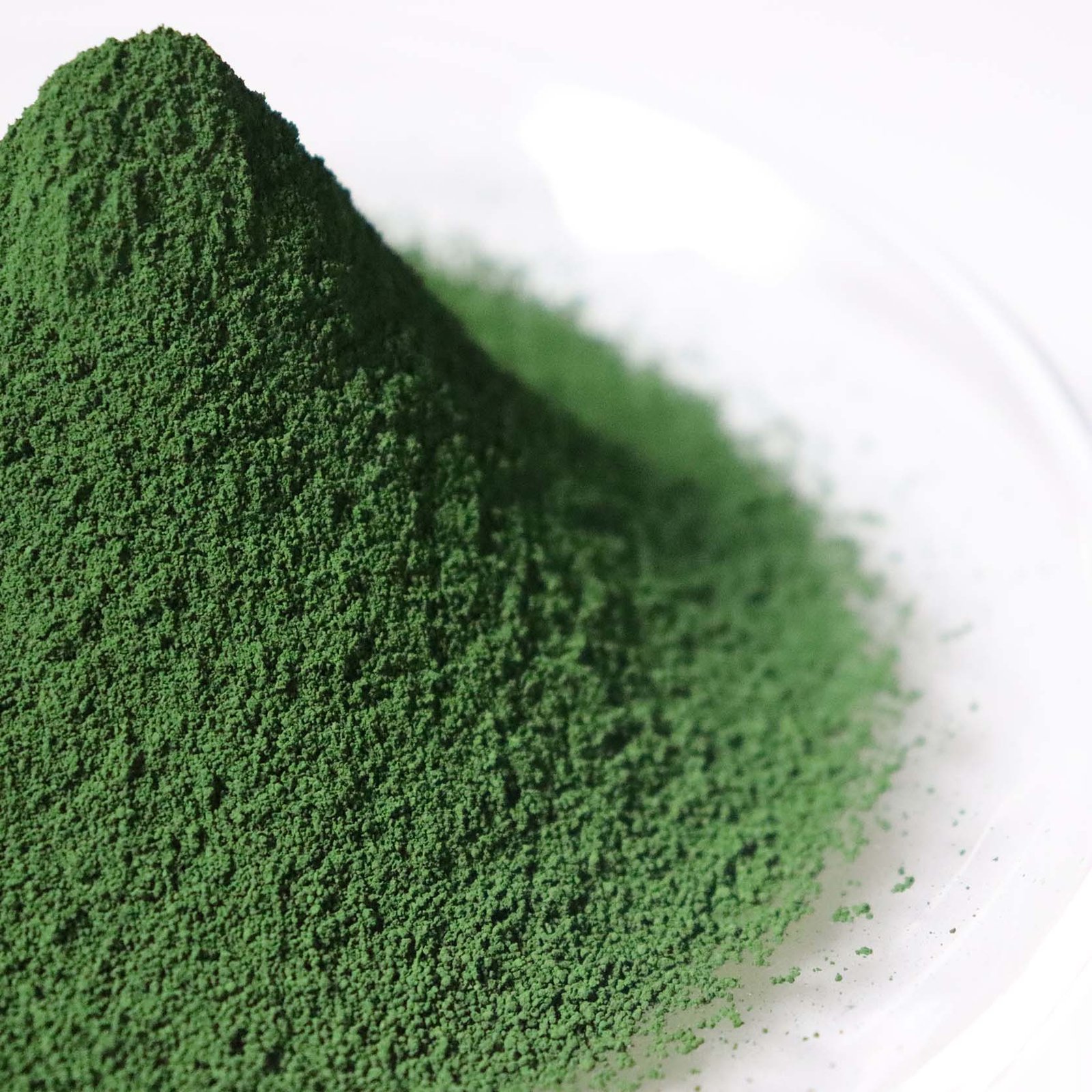
Introduction to Chromium Oxide Green in Glass Manufacturing
Chromium oxide green (Cr2O3) has established itself as one of the most important inorganic colorants in the glass industry, prized for its exceptional color development, outstanding chemical stability, and excellent thermal resistance. When incorporated into glass compositions, chromium oxide produces distinctive green hues ranging from pale sage to deep emerald, depending on concentration and oxidation conditions.
The history of chromium oxide as a glass colorant spans centuries, with early glassmakers discovering that adding chromium compounds to molten glass produced striking green colors. Modern production methods have refined this ancient knowledge into a precise science, with carefully controlled manufacturing processes ensuring consistent color development and quality in finished glass products.
Chemistry of Chromium in Glass
The coloration mechanism of chromium in glass involves the incorporation of chromium ions into the glass matrix during the melting process. Trivalent chromium (Cr3+) ions occupy octahedral coordination sites within the silicate network, creating the characteristic green color through ligand field transitions. The intensity and hue of the resulting color depends on several factors, including chromium concentration, glass composition, melting temperature, and atmospheric conditions in the furnace.
Oxidation conditions play a crucial role in determining the final color achieved with chromium additions. Under oxidizing conditions, chromium exists primarily as Cr6+ ions, which produce yellow-orange coloration rather than green. Furnace atmosphere control ensures sufficient reducing conditions to maintain chromium in the Cr3+ state, enabling consistent green color development.
Architectural Glass Applications
The architectural glass industry represents one of the largest markets for chromium-colored glass products. Commercial buildings, residential complexes, and public structures incorporate green-tinted glass for its aesthetic appeal, solar control properties, and connection to natural environments. Chromium oxide provides the stable, consistent coloration required for large-scale architectural projects where color matching across multiple production lots is essential.
Body-tinted architectural glass produced with chromium oxide offers excellent solar control performance, reducing heat gain through glazing while maintaining daylight transmission. The green tint selectively absorbs infrared radiation while allowing visible light to pass through, creating comfortable interior environments while reducing air conditioning loads.
Automotive Glass Applications
Automotive manufacturers utilize chromium-tinted glass in various vehicle glazing applications, from windshields to rear windows and sunroofs. The green tint provides effective glare reduction while maintaining excellent visibility for drivers, enhancing driving comfort and safety. Chromium oxide thermal stability ensures that color remains stable during the high-temperature glass tempering process.
Windshield glass typically incorporates chromium alongside other colorants to achieve the specific green tint required by automotive specifications. The color must meet precise optical requirements, including defined transmittance values and color coordinates that ensure consistent appearance.
Container and Packaging Glass
The container glass industry utilizes chromium oxide to produce green glass containers for beverages, cosmetics, pharmaceuticals, and specialty products. Amber and green glass dominate the beverage container market, with chromium providing the characteristic forest green associated with beer bottles and certain wine bottles. The color provides both aesthetic appeal and functional benefits, including light protection for photosensitive contents.
Glass packaging for beverages requires careful attention to color consistency, as variations between bottles from different production runs can create appearance problems on store shelves. Chromium oxide predictable color development enables tight control over final product color.
Decorative and Art Glass
Decorative glass artists and manufacturers employ chromium oxide to create distinctive products ranging from stained glass windows to art glass vessels and sculptures. The vibrant, stable green produced by chromium addition offers aesthetic possibilities unavailable with organic colorants, including resistance to UV degradation that ensures long-lasting beauty.
Stained glass windows in churches, public buildings, and residential installations have utilized chromium-colored glass for centuries. The color stability of chromium oxide ensures that these artistic creations maintain their beauty through decades of exposure to sunlight.
Specialty Optical Glass
Optical glass manufacturers produce specialized chromium-tinted glasses for applications requiring specific spectral characteristics. These specialty products serve scientific instruments, medical devices, and industrial equipment where precise light transmission properties are essential. Chromium oxide additions must be precisely controlled to achieve the exact color coordinates required.
Filter glass for photography, cinematography, and scientific applications often incorporates chromium to produce neutral green filtration with specific wavelength characteristics. These precision products require extremely tight tolerances on color development.
Process Considerations
Successful incorporation of chromium oxide into glass compositions requires attention to several process parameters that affect color development and glass quality. The pigment must be uniformly distributed throughout the glass melt to ensure consistent coloration. Batch mixing procedures and melt homogenization techniques ensure proper pigment dispersion.
Furnace atmosphere control significantly impacts chromium color development, with reducing conditions promoting Cr3+ formation and green coloration. Furnace atmosphere must be maintained within tight ranges to ensure consistent results.
Quality Control and Testing
Glass manufacturers implement comprehensive quality control procedures to ensure consistent chromium coloration across production. Spectrophotometric measurements of finished glass products verify that color coordinates and transmittance values meet specifications.
Chemical analysis of glass samples verifies chromium content and identifies potential variations in batch composition. Modern analytical techniques including X-ray fluorescence (XRF) and inductively coupled plasma (ICP) spectroscopy enable rapid, accurate determination.
Environmental and Safety Considerations
Chromium oxide presents minimal environmental concern when properly incorporated into glass compositions. The Cr3+ oxidation state used in glass coloring is stable and non-toxic, unlike the Cr6+ form associated with occupational health hazards. Modern glass manufacturing facilities implement comprehensive environmental management systems.
Occupational safety considerations for chromium oxide handling focus on dust inhalation prevention during pigment addition and handling operations. Engineering controls including local exhaust ventilation and enclosed handling systems protect workers.
Future Developments
Ongoing research explores new applications and improved formulations for chromium in glass manufacturing. Smart glass technologies incorporating chromium-based electrochromic coatings promise dynamic light control capabilities for future applications.
Sustainability initiatives drive development of improved manufacturing processes that reduce energy consumption and emissions in glass production. Chromium oxide stability and effectiveness enable efficient use of raw materials while minimizing waste.
Conclusion
Chromium oxide green has earned its position as a premier glass colorant through centuries of successful application and continuous improvement. Its combination of aesthetic appeal, chemical stability, thermal resistance, and versatility addresses the diverse requirements of glass manufacturers across architectural, automotive, container, decorative, and specialty applications.
As glass technology advances and market requirements evolve, chromium oxide will continue to serve as an essential tool for glass manufacturers seeking to create distinctive, high-quality products.