II. High-End Application Cases: Comprehensive Implementation from Technical Advantages to Industrial Effectiveness
Case 1: Precision Polishing of Aerospace Titanium Alloy Blades—High Temperature Resistance + High Hardness Solving Processing Pain Points
An aerospace manufacturing enterprise faced two core challenges in meeting the precision polishing requirements of titanium alloy engine blades: first, the thermal deformation temperature of titanium alloy is only 550℃, and the high temperature generated by high-speed grinding (linear velocity of 35m/s) is prone to blade deformation; second, the required surface roughness Ra ≤ 0.015μm, which makes it difficult for traditional abrasives to balance efficiency and precision. Previously, when using aluminum oxide abrasives, due to the heat resistance limit of less than 800℃, the abrasives were prone to softening and passivation during high-speed grinding, with a polishing efficiency of only 0.8 m²/h. Moreover, the blade surface had a high scratch rate, and the rejection rate reached 12%.
After switching to VerdeChrome® Green 1025, its ultra-high heat resistance of 982℃ perfectly adapted to high-temperature working conditions, stabilizing the grinding temperature below 500℃ and completely avoiding the risk of blade thermal deformation. The advantage of Mohs hardness 9.0 increased the cutting efficiency to 1.2 m²/h, a 50% improvement compared with aluminum oxide abrasives. Meanwhile, the uniform particle size of 1.0–2.0μm and sieve residue content ≤ 0.30% ensured balanced grinding force, resulting in a stable blade surface roughness of Ra ≤ 0.012μm and a sharp drop in the rejection rate to below 3%. This solution was subsequently promoted to the grinding of nickel-based superalloy combustion chamber components, reducing the comprehensive processing cost by 40% and shortening the production cycle by 30%.
Case 2: Edge Grinding of Semiconductor Wafers—Low Impurity + Neutral Properties Ensuring Cleanliness
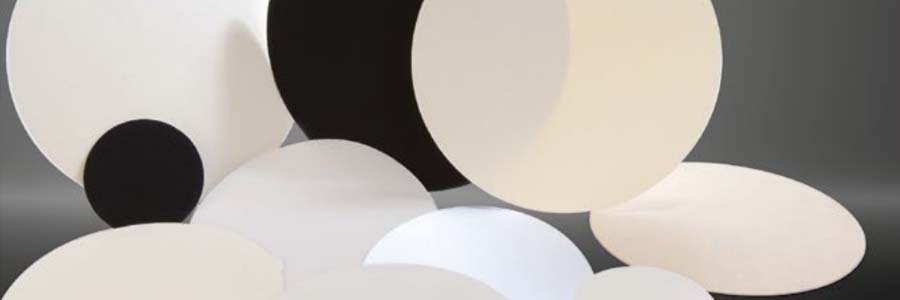
The semiconductor industry has extremely stringent requirements for zero pollution in wafer grinding. Heavy metal impurities or acid-alkali corrosion marks remaining on the edges will directly lead to a decline in chip yield. Previously, when a semiconductor enterprise used silicon oxide abrasives, silicon oxide was easily eroded by alkaline grinding fluid, generating soluble silicate impurities that were difficult to clean, resulting in a chip yield of only 85%. After switching to silicon carbide abrasives, although the hardness met the standard, trace heavy metal impurities exceeded the limit, and there was a slight corrosion problem in acidic grinding fluid.
The low-impurity characteristic of VerdeChrome® Green 1025 became the key to solving the problem: its hexavalent chromium content is below 5 ppm, far lower than the semiconductor industry limit; water-soluble salt content ≤ 0.70%, with no additional impurity precipitation in the grinding fluid; more importantly, its neutral property with a pH value of 6–8 perfectly meets the sensitive requirements of wafers for acid-base environments (pH values outside the range of 5–9 are prone to causing corrosion spots). Combined with the advantages of grade 5 mobility, which prevents particle diffusion and sedimentation, there is no impurity residue after wafer edge grinding, the cleaning process is simplified by 60%, the chip yield is increased to 96%, and the production efficiency per batch is increased by 2 million yuan.
Case 3: Grinding of Precision Optical Glass—Low Oil Absorption + Particle Uniformity Improving Polishing Quality
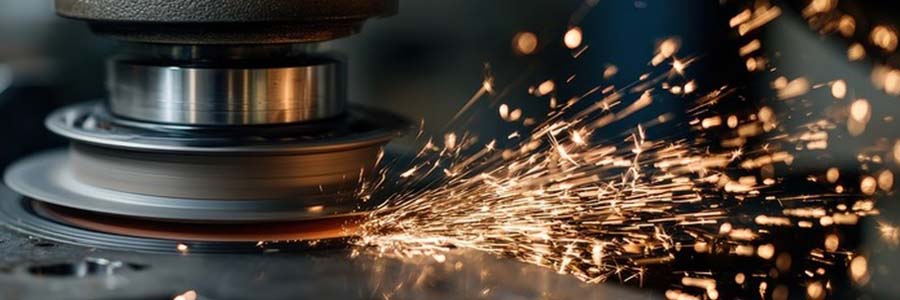
An optical instrument manufacturer required that the polished surface of high-end camera lens glass be free of haze and scratches, and the grinding paste must have good dispersion stability. Previously, when using ordinary chromium oxide green abrasives, due to the high oil absorption, a large amount of resin carrier was needed to balance the formula, resulting in a reduction in the effective concentration of abrasives and a polishing efficiency of only 1.5 pieces/h. In addition, the large fluctuation of particle size made it easy to produce fine pitting on the glass surface, affecting the optical transmittance.
After adopting VerdeChrome® Green 1025, its low oil absorption characteristic of ≤ 25g/100mg reduced the dosage of resin carrier in the grinding paste by 30%, increased the effective concentration of abrasives to 60%, and improved the polishing efficiency to 2.3 pieces/h. The precise particle control of 1.0–2.0μm enabled the glass surface roughness to reach Ra ≤ 0.008μm and haze value ≤ 0.02%, far exceeding the industry standard (haze ≤ 0.05%). This product was subsequently applied to the grinding of high-end optical components such as microscope objectives and laser lenses, increasing the product qualification rate from 90% to 99%.
Case 4: Grinding of Wear-Resistant Coatings for Industrial Equipment—Low Mobility + Over-Coating Resistance Adapting to Subsequent Processes
A heavy machinery enterprise needed to perform precision grinding after coating to improve the wear resistance of equipment shells. It was required that the coating adhesion would not decrease after grinding, and no particle residue on the surface would affect the subsequent over-coating effect. Previously, when using aluminum oxide abrasives, due to the poor mobility (grade 3), some particles were embedded into the coating after grinding, resulting in blistering and peeling during subsequent painting, with a rework rate of 18%. In addition, the solvent resistance of aluminum oxide abrasives was average, and they were prone to swelling under the action of coating thinners, affecting the grinding accuracy.
After switching to VerdeChrome® Green 1025, its grade 5 mobility ensured that particles would not embed into the coating or spread to cause pollution, greatly improving the surface cleanliness after grinding. Its grade 5 over-coating resistance and excellent solvent tolerance maintained stable performance in the coating thinner environment without swelling or decomposition. After grinding, the coating adhesion remained at the original level (GB/T 9286-1998 Grade 1), and there were no blistering or peeling problems in subsequent over-coating. The rework rate was reduced to below 2%, production efficiency was increased by 40%, and comprehensive costs were reduced by 25%.
Case 5: Grinding of Stainless Steel Components for Medical Devices—Low Impurity + Biocompatibility Meeting Stringent Standards
A medical device enterprise faced three core challenges in producing surgical instruments (such as stainless steel hemostats and orthopedic implants): first, the surface after grinding must be free of heavy metal residues, complying with the ISO 10993 biocompatibility standard; second, stainless steel components must withstand high-temperature and high-pressure sterilization (134℃), and the grinding layer must not experience performance degradation due to sterilization; third, the surface roughness must be controlled at Ra ≤ 0.01μm to avoid bacterial growth. Previously, when using ordinary chromium oxide green abrasives, the biocompatibility test repeatedly failed due to excessive hexavalent chromium content (≥15 ppm); in addition, particle residues led to minor rust spots on the surface after sterilization, with a rejection rate of 15%.
After switching to VerdeChrome® Green 1025, its hexavalent chromium content below 5 ppm and water-soluble salt content ≤ 0.70% fully met the ISO 10993 biocompatibility requirements, passing the test at one time. The high stability of the α-phase structure ensured no performance degradation after sterilization at 134℃, and the particle residue was reduced to below 0.001mg/cm², completely eliminating the problem of rust spots. After grinding with uniform particles of 1.0–2.0μm, the surface roughness of components stably reached Ra ≤ 0.009μm, meeting the requirements for sterile use. After the promotion of this solution, the rejection rate was reduced to 2%, the production cycle was shortened by 20%, and the risk of product recall caused by non-compliance with biocompatibility was avoided.
Case 6: Precision Processing of Automobile Components—High Hardness + Heat Resistance Adapting to High-Speed Mass Production Needs
An automobile manufacturer faced pain points in the precision grinding of engine crankshafts (42CrMo alloy steel) and gearbox gears: first, in high-speed mass production scenarios (grinding linear velocity of 40m/s), traditional abrasives were prone to passivation, leading to low efficiency; second, components had to withstand high engine temperatures (≥400℃), and the ground surface wear-resistant layer must have long-term stability; third, the surface precision required Ra ≤ 0.012μm to ensure smooth transmission. Previously, when using silicon carbide abrasives, due to their hard but brittle characteristics, particles were prone to disintegration, with a grinding efficiency of only 1.0 piece/h, and minor edge chipping was easy to occur on the gear surface. After switching to aluminum oxide abrasives, the efficiency increased to 1.3 pieces/h, but the heat resistance was insufficient, and the surface wear-resistant layer was prone to wear under high-temperature working conditions, reducing the service life of components by 30%.
After adopting VerdeChrome® Green 1025, the combination of Mohs hardness 9.0 and the toughness advantage of the α-phase maintained cutting sharpness even when the grinding linear velocity was increased to 45m/s, improving the efficiency to 1.8 pieces/h, an 80% increase compared with silicon carbide abrasives. The ultra-high heat resistance of 982℃ ensured no performance degradation of the grinding layer in the high-temperature engine environment, extending the service life of components by 50%. The precise particle control of 1.0–2.0μm and sieve residue content ≤ 0.30% enabled the surface roughness of crankshafts and gears to stably reach Ra ≤ 0.01μm, reducing transmission noise by 15dB, increasing the product qualification rate from 92% to 99.5%, and reducing the comprehensive mass production cost by 30%.