
Chromium Oxide Green in Precision Polishing: From Optics to Semiconductors
Precision polishing represents one of the most demanding applications for abrasive materials, requiring exceptional particle hardness, controlled particle size distribution, and chemically reactive surface properties. Chromium oxide green (Cr2O3) has established itself as the premier abrasive material for precision optics, semiconductor fabrication, and advanced manufacturing applications where surface quality at the nanometer and atomic level is essential.
Fundamentals of Precision Polishing
Precision polishing differs fundamentally from conventional grinding and lapping operations in its material removal mechanism. Rather than relying purely on mechanical abrasion, precision polishing combines mechanical and chemical effects to achieve exceptionally smooth surfaces with minimal subsurface damage. The polishing process involves controlled chemical reactions between the workpiece surface and the polishing environment, with abrasive particles providing precise mechanical guidance for material removal.
The quality of a polished surface depends on the absence of surface and subsurface damage at multiple scales. Microscopic scratches, digs, and residual stress zones can compromise optical performance, electronic device functionality, or mechanical component reliability. Achieving damage-free surfaces requires careful selection of polishing parameters, abrasives, and process conditions optimized for each specific application.
Properties of Chromium Oxide Abrasives
Chromium oxide green possesses several properties that make it exceptionally well-suited for precision polishing applications. The material exhibits a Mohs hardness of approximately 8.5, placing it between topaz and corundum on the hardness scale. This hardness provides sufficient cutting ability for efficient material removal while avoiding the excessive abrasion that could damage delicate workpiece surfaces.
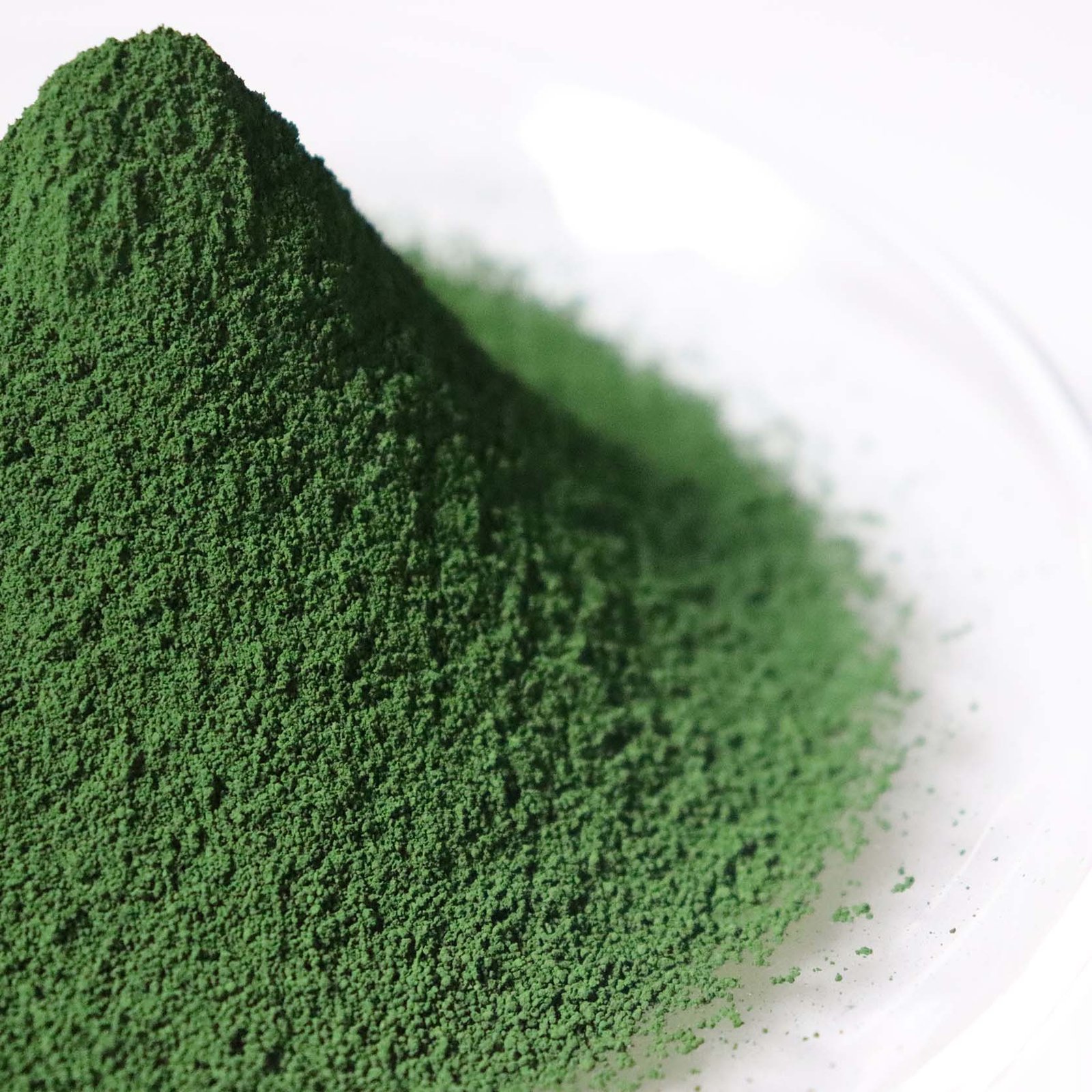
The green color of chromium oxide results from chromium ions in a +3 oxidation state, which also contributes to the abrasive’s chemical stability and biocompatibility. Unlike chromium +6 compounds, which are hazardous, Cr2O3 presents minimal environmental or health concerns under normal handling conditions. This safety profile allows broad use in precision manufacturing without special handling precautions.
Crystalline chromium oxide particles exhibit angular, blocky shapes that provide efficient cutting action while maintaining consistent performance throughout the polishing operation. The blocky particle morphology differs from softer abrasives that tend to fracture and generate inconsistent particle sizes during use. This consistency ensures stable material removal rates and surface quality throughout extended polishing cycles.
Precision Optics Manufacturing
The precision optics industry represents a primary market for chromium oxide polishing abrasives. Optical components for telescopes, microscopes, camera lenses, laser systems, and photolithography equipment require surfaces polished to nanometer-level smoothness and accuracy. Chromium oxide has served this demanding industry for decades, producing surfaces that meet the most exacting specifications.
Optical glass polishing with chromium oxide typically employs sub-micron particle sizes, with modern formulations utilizing particles in the 0.1-1.0 micrometer range. These fine particles generate smooth surfaces through a combination of chemical-mechanical polishing (CMP) mechanisms, where the alkaline polishing slurry chemically softens the glass surface while mechanical action removes material with minimal damage.
The thermal stability of chromium oxide enables efficient polishing across a wide temperature range without particle degradation. Polishing operations may generate significant frictional heat, particularly during initial stock removal stages. Cr2O3 maintains consistent hardness and cutting ability regardless of temperature variations, ensuring predictable process behavior throughout the polishing cycle.
Semiconductor CMP Applications
Chemical-mechanical polishing has become an essential manufacturing process for integrated circuit fabrication. Modern semiconductor devices contain multiple layers of conductive and dielectric materials patterned on silicon wafers, requiring planarization between deposition steps to maintain lithographic depth of focus. CMP processes utilize chromium oxide and other abrasives to achieve the angstrom-level flatness required for advanced semiconductor devices.
In semiconductor CMP, the polishing slurry composition must be precisely controlled to achieve appropriate material removal rates and surface quality. Chromium oxide particles provide mechanical action while chemical components, typically alkaline solutions with oxidizing agents, modify the workpiece surface to facilitate removal. The synergy between mechanical and chemical effects enables superior planarization compared to purely mechanical polishing methods.
Different semiconductor layers require different polishing characteristics. Oxide CMP, which planarizes silicon dioxide dielectric layers, benefits from chromium oxide’s moderate hardness and controlled particle size distribution. Metal CMP, used for copper and tungsten damascene processing, requires specialized slurry formulations that balance material removal selectivity while avoiding dishing and erosion defects.
Hard Disk Drive Substrate Polishing
The magnetic recording industry depends on precision polishing to manufacture hard disk drive platters with surfaces smooth enough to support modern areal densities. Disk substrate polishing employs chromium oxide abrasives in multi-step processes that progressively reduce surface roughness from initial grinding through final polish. Surface roughness below 0.5 nanometers root-mean-square enables reliable operation of modern recording heads flying just nanometers above the disk surface.
Aluminum-magnesium alloy substrates receive nickel-phosphorus coatings that provide the mechanical properties and surface characteristics required for magnetic recording. Polishing these composite structures requires abrasives that can achieve smooth surfaces in both the coating material and any exposed substrate areas. Chromium oxide’s versatility makes it suitable for polishing multiple material types encountered during disk manufacturing.
Medical Device Manufacturing
Medical implants and surgical instruments require surfaces polished to specific roughness specifications for biocompatibility and functionality. Orthopedic implants with articulating surfaces, such as artificial joints, demand exceptionally smooth surfaces to minimize wear and friction during years of service. Chromium oxide polishing achieves the required surface quality while maintaining the mechanical properties of underlying implant materials.
Surgical instruments, particularly those used in minimally invasive procedures, require polished surfaces that facilitate cleaning and sterilization while providing appropriate tactile feedback to surgeons. Polishing with chromium oxide creates smooth, corrosion-resistant surfaces that meet medical device regulatory requirements while achieving the functional characteristics required for specific surgical applications.
Advanced Ceramics Polishing
Technical ceramics, including alumina, silicon carbide, and nitride materials, present particular polishing challenges due to their extreme hardness and brittleness. Achieving smooth surfaces on ceramic components without introducing subsurface damage requires careful selection of polishing abrasives and process parameters. Chromium oxide serves as an effective final polishing abrasive for many ceramic materials.
Silicon carbide ceramic components used in semiconductor process equipment require surfaces polished to mirror finishes for optimal performance. The chemical resistance of silicon carbide limits the effectiveness of many polishing approaches, but chromium oxide’s chemical stability and appropriate hardness enable controlled material removal without surface degradation. Similar considerations apply to silicon nitride and other advanced ceramic materials.
Abrasive Suspension Stability
The effectiveness of chromium oxide polishing depends critically on maintaining stable abrasive suspensions throughout the polishing operation. Particles must remain uniformly distributed in the polishing slurry without settling, aggregation, or floatation. Specialized dispersing agents and viscosity modifiers help maintain suspension stability in both aqueous and non-aqueous polishing formulations.
Slurry delivery systems must provide consistent flow rates and particle concentrations throughout the polishing process. Variations in abrasive concentration create non-uniform material removal that compromises surface quality and consistency. Modern polishing equipment incorporates sophisticated slurry delivery systems with continuous mixing and recirculation capabilities to maintain optimal particle distribution.
Process Optimization Strategies
Optimizing chromium oxide polishing processes requires systematic investigation of multiple parameters including particle size, concentration, pad material and condition, pressure, velocity, and slurry chemistry. Each application presents unique constraints and objectives that guide the optimization process. Statistical design of experiments enables efficient exploration of these parameter spaces to identify optimal operating conditions.
Surface characterization techniques including interferometry, atomic force microscopy, and scanning electron microscopy provide feedback on process effectiveness. In-process metrology enables closed-loop control of polishing parameters to achieve consistent surface quality despite variations in starting stock and environmental conditions. Advanced process control algorithms incorporate surface measurement feedback to adjust polishing parameters dynamically.
Environmental and Economic Considerations
Precision polishing operations generate waste streams containing abrasive particles, removed material, and process chemicals that require appropriate management. Water-based slurries present fewer environmental concerns than solvent-based alternatives, but still require treatment before discharge. Chromium oxide’s chemical stability simplifies waste treatment compared to reactive polishing abrasives.
The cost of precision polishing abrasives represents a small fraction of total manufacturing cost for most precision components, but optimization of abrasive usage still provides meaningful economic benefits. Reducing particle concentration while maintaining surface quality targets reduces material costs and waste generation. Reclaiming and recycling used abrasives offers additional cost reduction opportunities for high-volume manufacturing operations.
Future Developments
Advanced materials and device architectures continue to push the boundaries of precision polishing requirements. Smaller feature sizes in semiconductor devices, higher recording densities in magnetic storage, and new optical materials for advanced lens systems create ongoing demands for improved polishing capabilities. Chromium oxide formulations continue to evolve to meet these demanding requirements.
Novel composite abrasive materials combining chromium oxide with other oxides offer potential performance improvements for specific applications. Engineered particle morphologies and surface coatings provide additional avenues for optimization. Research into alternative environmentally-friendly manufacturing processes for chromium oxide may reduce production costs and environmental impacts while maintaining performance characteristics.
Conclusion
Chromium oxide green has earned its position as the premier abrasive for precision polishing applications across multiple high-technology industries. Its combination of appropriate hardness, chemical stability, consistent particle characteristics, and versatile performance addresses the challenging requirements of optics, semiconductors, magnetic storage, medical devices, and advanced ceramics manufacturing.
As precision manufacturing continues to advance toward smaller scales and stricter tolerances, chromium oxide polishing technology will continue to evolve to meet these challenges. The fundamental properties of Cr2O3 that make it valuable for current applications will enable its use in future precision manufacturing technologies that we can only begin to imagine today.