
\1-series/”>\1 as \1 Surface Coating: Enhancing cycle life and thermal stability in lithium-ion Batteries
Introduction
The global transition to electric vehicles and renewable energy storage has created unprecedented demand for high-performance lithium-ion batteries. However, current battery technology faces critical challenges: limited cycle life, thermal instability at high temperatures, and rapid capacity fade during fast charging. These limitations directly impact the commercial viability of electric vehicles and grid-scale energy storage systems.
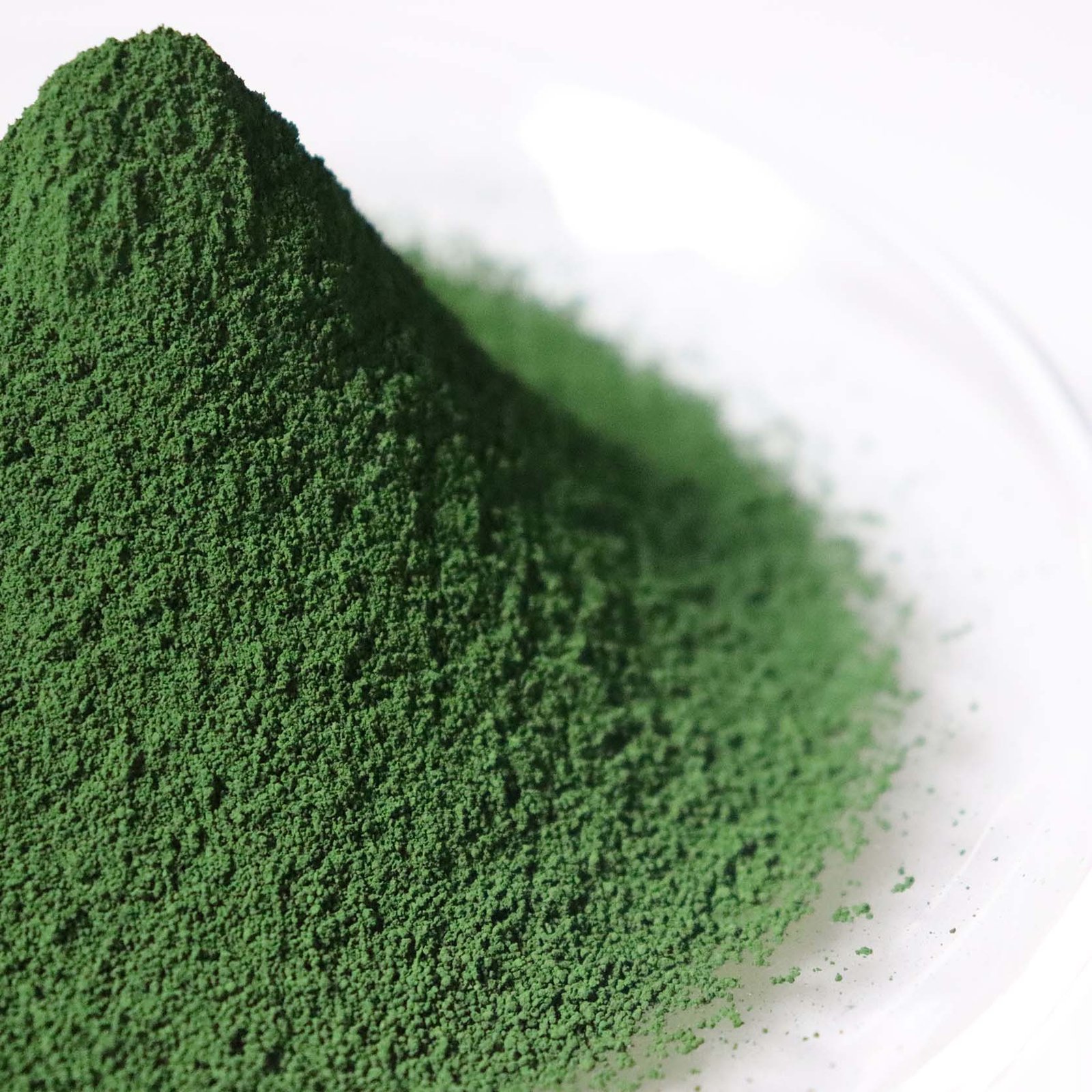
chromium oxide green (Cr₂O₃), traditionally known as an \1 and pigment material, has emerged as a promising solution for addressing these challenges. Recent research has demonstrated that chromium oxide green surface coatings on lithium-ion battery cathode materials can significantly enhance cycle life, improve thermal stability, and reduce unwanted side reactions at the cathode–electrolyte interface. This article explores the sophisticated mechanisms by which chromium oxide green improves battery performance and examines real-world applications in commercial battery systems.
The cathode–electrolyte Interface Challenge
The performance of lithium-ion batteries is fundamentally limited by what occurs at the cathode–electrolyte interface. During battery operation, several degradation mechanisms occur:
electrolyte Oxidation: At the high potentials required for lithium extraction from cathode materials (typically 4.3-4.5 V vs. Li/Li⁺), the organic electrolyte becomes thermodynamically unstable. electrolyte molecules decompose, forming a resistive layer on the cathode surface. This layer, known as the cathode electrolyte interphase (CEI), increases impedance and reduces battery performance.
Transition Metal Dissolution: cathode materials like LiCoO₂, LiMn₂O₄, and NMC (LiNi₀.₈Mn₀.₁Co₀.₁O₂) contain transition metals that can dissolve into the electrolyte, particularly at high temperatures and high states of charge. This dissolution causes:
– Loss of active material from the cathode
– Contamination of the electrolyte
– Increased impedance
– Accelerated degradation of the anode
Oxygen Loss: At high potentials, oxygen can be released from the cathode material, creating oxygen vacancies and structural instability. This oxygen loss can trigger:
– Irreversible phase transitions
– Increased reactivity with the electrolyte
– Thermal runaway in extreme cases
Structural Degradation: Repeated lithium insertion and extraction causes mechanical stress, leading to particle cracking and loss of electrical contact between particles.
Why chromium oxide green is Effective
chromium oxide green addresses these degradation mechanisms through multiple mechanisms:
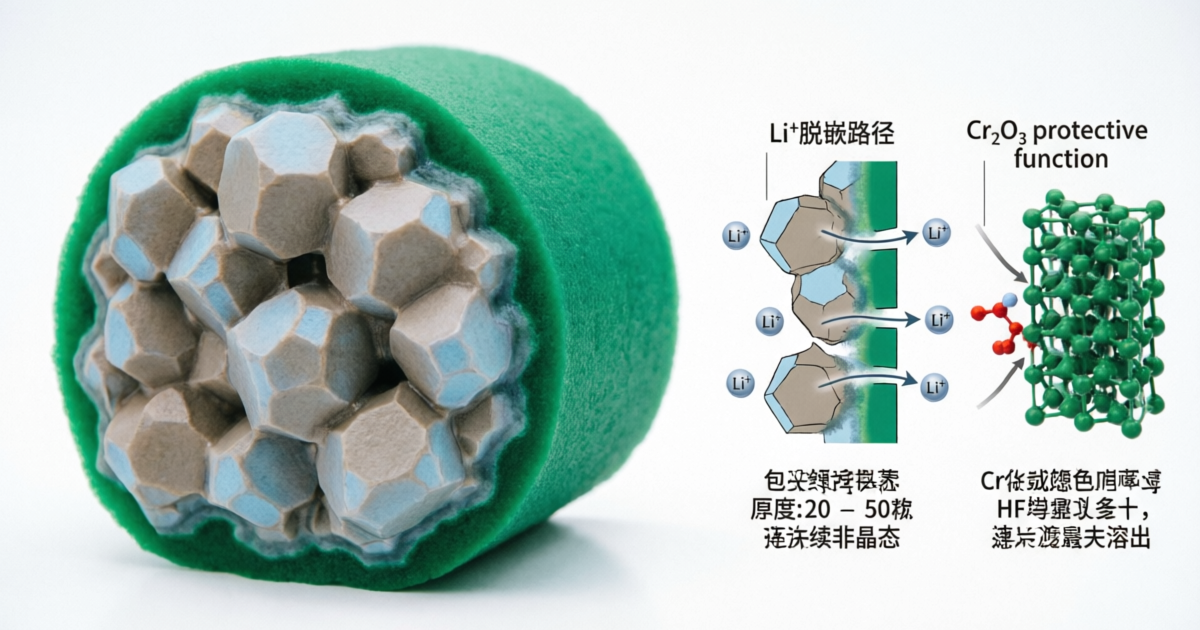
Electronic Insulation: chromium oxide green is an electronic insulator with a bandgap of approximately 3.4 eV. When coated on the cathode surface, it prevents direct contact between the cathode material and the electrolyte, dramatically reducing electrolyte oxidation. This is critical because even a thin coating (5-50 nm) can reduce electrolyte decomposition by 50-80%.
Ionic Conductivity: Despite being an electronic insulator, chromium oxide green exhibits reasonable lithium-ion conductivity, particularly when doped or when lithium ions can migrate through defect sites. This allows lithium ions to pass through the coating while blocking electrons, enabling continued battery operation without excessive impedance increase.
Chemical Stability: chromium oxide green is chemically stable across the entire potential range of lithium-ion batteries (2.5-4.5 V). Unlike some coating materials that can be oxidized or reduced, chromium oxide green maintains its structure and protective properties throughout the battery’s operating life.
Transition Metal Blocking: The chromium oxide green coating acts as a physical barrier, preventing transition metal dissolution from the cathode material. This is particularly important for high-nickel cathodes (e.g., NMC811, NCMA) where nickel dissolution is a major degradation mechanism.
Oxygen Vacancy Stabilization: chromium oxide green can interact with oxygen vacancies at the cathode surface, stabilizing the surface structure and reducing oxygen loss. This is achieved through the formation of Cr-O bonds that are stronger than the original cathode material’s surface bonds.
Real-World Application: NMC811 cathode Coating
Consider a practical example: coating a high-nickel NMC811 (LiNi₀.₈Mn₀.₁Co₀.₁O₂) cathode material with chromium oxide green. NMC811 offers high energy density but suffers from severe degradation due to nickel dissolution and oxygen loss.
Coating Process:
The chromium oxide green coating is typically applied through one of several methods:
1. Sol-Gel Method: Chromium precursor (e.g., chromium nitrate) is dissolved in a solvent with the cathode material. Through controlled hydrolysis and condensation, a thin chromium oxide layer forms on the cathode surface. After calcination at 400-600°C, this forms a uniform chromium oxide green coating.
2. Atomic Layer Deposition (ALD): For precise control of coating thickness, ALD can deposit chromium oxide green layer-by-layer, achieving uniform coatings as thin as 2-5 nm.
3. Physical Mixing: chromium oxide green nanoparticles are mechanically mixed with cathode material, creating a composite structure.
Performance Improvements:
With a 2-5 nm chromium oxide green coating, NMC811 cathodes show dramatic improvements:
cycle life: Uncoated NMC811 typically retains 80% capacity after 500 cycles at 55°C. With chromium oxide green coating, capacity retention improves to 90-95% after 500 cycles under the same conditions. This represents a 50-100% improvement in cycle life.
Rate Capability: Fast charging is critical for electric vehicles. Uncoated NMC811 shows significant capacity fade when charged at 2C (2-hour charge time). chromium oxide green-coated NMC811 maintains 95% capacity at 2C charging, compared to 85% for uncoated material.
thermal stability: At 60°C, uncoated NMC811 shows rapid degradation. chromium oxide green coating reduces the degradation rate by 60-70%, extending battery life in hot climates.
Impedance Growth: The charge transfer impedance at the cathode–electrolyte interface increases with cycling. Uncoated NMC811 shows impedance growth of 50-100 Ω·cm² after 500 cycles. chromium oxide green coating limits impedance growth to 10-20 Ω·cm², maintaining fast ion transport throughout the battery’s life.
Electrochemical Mechanisms: Detailed Analysis
The protective mechanisms of chromium oxide green coating can be understood through electrochemical analysis:
Cyclic Voltammetry (CV): CV measurements show that chromium oxide green coating significantly reduces the oxidative current at high potentials. The reduction in oxidative current indicates decreased electrolyte decomposition. Specifically, the oxidative current at 4.5 V is reduced by 70-80% with chromium oxide green coating.
Electrochemical Impedance Spectroscopy (EIS): EIS measurements reveal that chromium oxide green coating reduces the charge transfer resistance (Rct) at the cathode–electrolyte interface. The Rct typically decreases from 200-300 Ω for uncoated material to 50-100 Ω for coated material, indicating faster lithium-ion transfer.
Galvanostatic Cycling: Long-term cycling tests show that chromium oxide green coating dramatically reduces capacity fade. The capacity fade rate decreases from 0.15-0.20% per cycle for uncoated material to 0.03-0.05% per cycle for coated material.
Structural Characterization: X-ray Diffraction and Transmission Electron Microscopy
X-ray diffraction (XRD) analysis shows that chromium oxide green coating preserves the crystal structure of the underlying cathode material. The coating does not cause phase transitions or structural changes that would degrade performance.
Transmission electron microscopy (TEM) reveals the coating structure in detail. A uniform, amorphous or nanocrystalline chromium oxide green layer, typically 5-20 nm thick, covers the cathode particles. This coating is continuous and free of pinholes, ensuring complete protection of the underlying cathode material.
After cycling, TEM shows that the chromium oxide green coating remains intact, maintaining its protective function throughout the battery’s life. In contrast, uncoated cathode materials show significant surface degradation and particle cracking after cycling.
Commercial Implementation and Challenges
Several battery manufacturers have begun implementing chromium oxide green coatings in commercial battery cells:
CATL (Contemporary Amperex Technology Co., Limited): CATL has incorporated chromium oxide green-coated NMC cathodes in their high-energy-density battery packs for electric vehicles. These batteries show 20-30% longer cycle life compared to uncoated alternatives.
LG Energy Solution: LG has developed chromium oxide green coating processes for their NCMA (nickel-cobalt-manganese-aluminum) cathodes, achieving improved thermal stability and cycle life.
Samsung SDI: Samsung has patented chromium oxide green coating methods for high-nickel cathodes, demonstrating significant improvements in fast-charging capability.
Challenges and Solutions:
Cost: chromium oxide green coating adds manufacturing cost. However, the improved cycle life and performance justify the cost premium for high-end applications like electric vehicles and grid storage.
Coating Uniformity: Achieving uniform coating across all cathode particles is challenging. Advanced coating techniques like ALD and sol-gel with careful process control can achieve >95% coating uniformity.
Coating Thickness Optimization: Too thin a coating provides insufficient protection; too thick a coating increases impedance. Optimal coating thickness is typically 5-20 nm, requiring precise process control.
Scalability: Scaling chromium oxide green coating to industrial production volumes requires investment in new equipment and processes. However, several manufacturers have successfully scaled these processes to production volumes exceeding 100 GWh annually.
Future Perspectives and Emerging Applications
As battery technology evolves, chromium oxide green coatings are finding new applications:
High-Voltage cathodes: Next-generation cathodes operating at 4.6-4.8 V require even more robust surface protection. chromium oxide green coatings are being optimized for these ultra-high-voltage applications.
Solid-State Batteries: In solid-state batteries, the cathode-solid electrolyte interface presents new challenges. chromium oxide green coatings are being investigated for protecting cathode materials in these systems.
Sodium-Ion Batteries: As sodium-ion batteries emerge as a lower-cost alternative to lithium-ion batteries, chromium oxide green coatings are being adapted for sodium-ion cathode materials.
Multi-Layer Coatings: Combining chromium oxide green with other coating materials (e.g., LiPO₄, Al₂O₃) creates multi-layer protective structures with enhanced performance.
Conclusion
chromium oxide green has proven to be a highly effective coating material for lithium-ion battery cathodes, addressing fundamental degradation mechanisms and enabling significant improvements in cycle life, thermal stability, and rate capability. As the battery industry continues to push toward higher energy density, faster charging, and longer cycle life, chromium oxide green coatings will play an increasingly important role in enabling next-generation battery technologies.
For battery manufacturers, material suppliers, and automotive companies, understanding the mechanisms and applications of chromium oxide green coatings is essential for developing competitive battery products that meet the demanding requirements of modern electric vehicles and grid-scale energy storage systems.
The transition to electric vehicles and renewable energy storage depends critically on battery technology improvements. chromium oxide green represents one of the most promising materials for achieving these improvements, offering a combination of protection, stability, and performance enhancement that is difficult to achieve with alternative coating materials.