
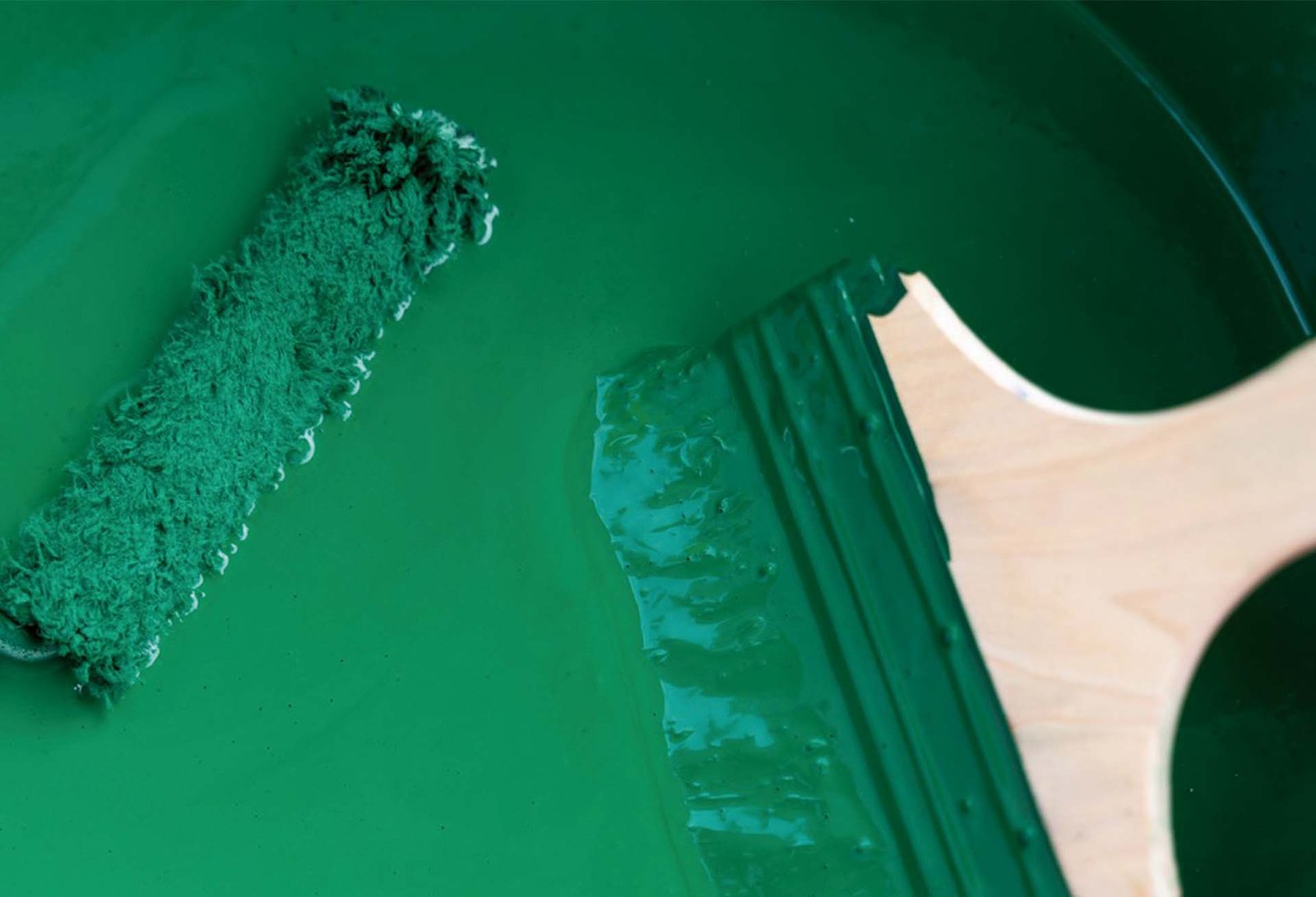
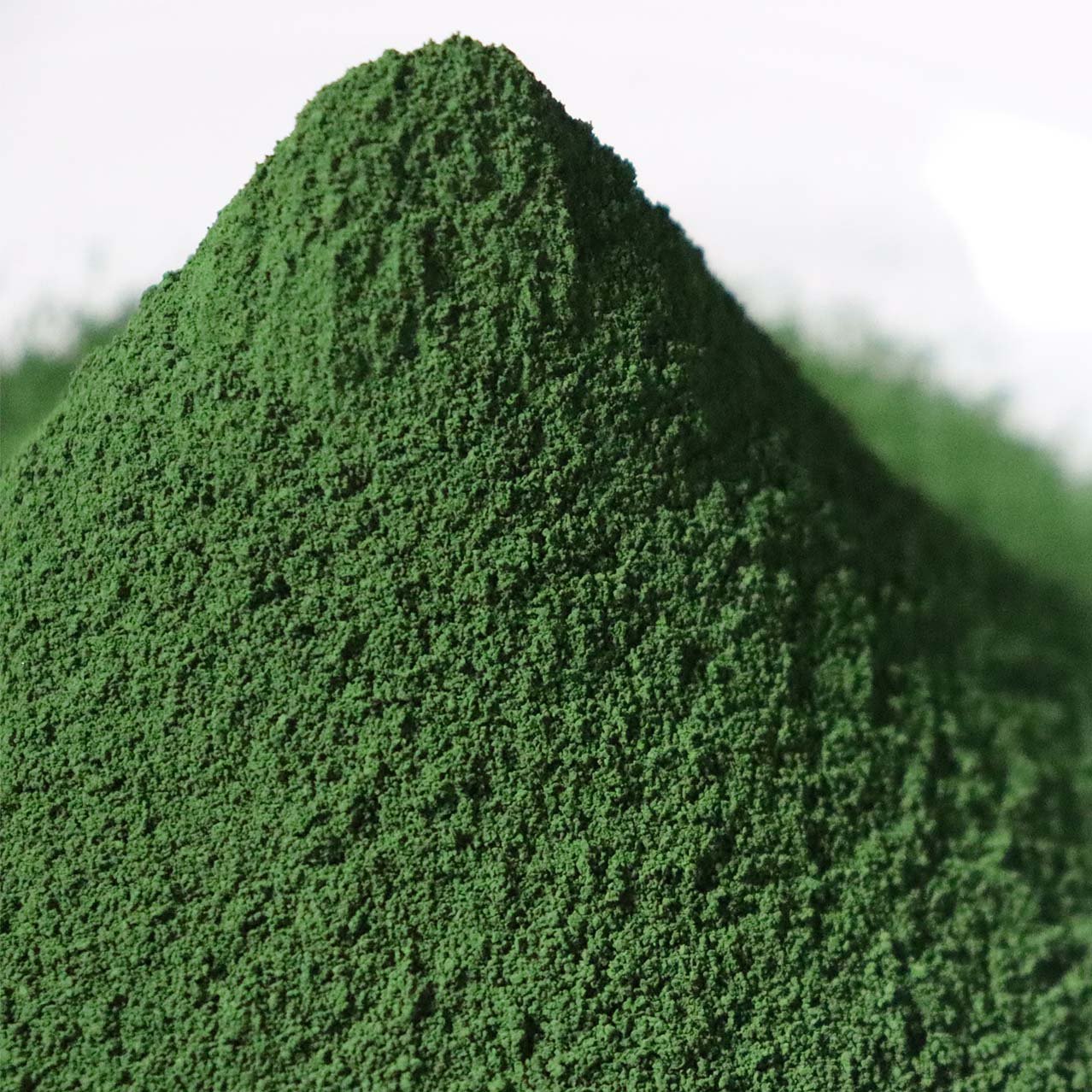
We have 12 different hues and specifications of chrome oxide green to meet the needs of most customers.
We are not only manufacturers of chrome oxide green pigments but also providers of application solutions for chrome oxide green pigments.
CI Pigment Green 17(P.G.17)
Chrome Oxide Green (Cr₂O₃), as an inorganic green pigment, has emerged as a core coloring agent in coatings, surface layers, powder coatings, ceramics, glass, and plastics since its industrial production in the 19th century, owing to its unique chemical stability, weather resistance, and environmental compatibility. Compared to traditional organic green pigments (e.g., phthalocyanine green) or other inorganic pigments (e.g., cobalt green, chromium green complex salts), chromium oxide green demonstrates significant advantages in high-temperature tolerance, chemical corrosion resistance, and ecological compliance. Particularly under the global trend of increasingly stringent environmental regulations, its market demand continues to grow.

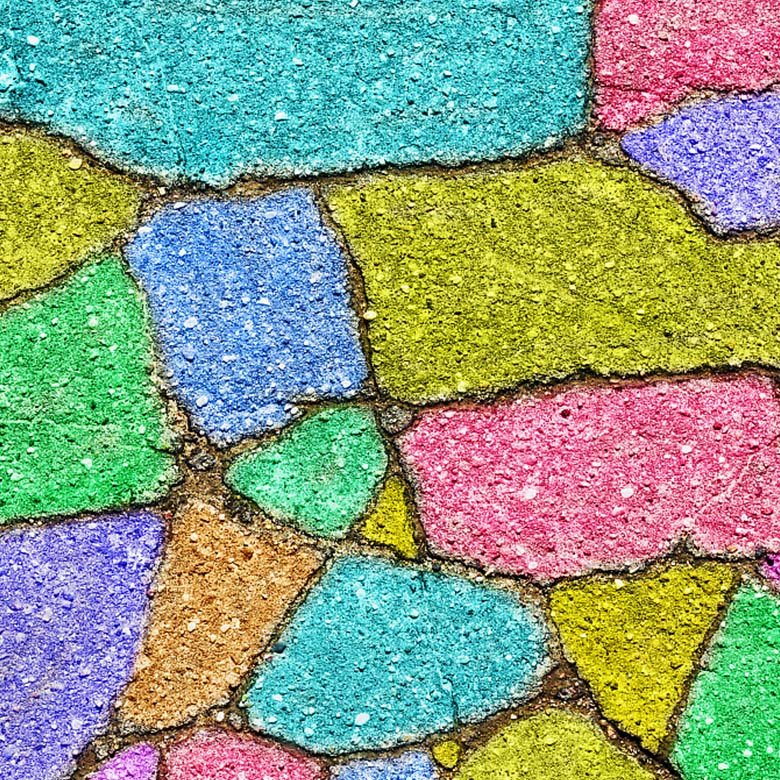
Full Spectrum Coverage: Tailored Solutions for Every Shade
Our chromium oxide green products span the entire spectrum from light green to deep green, offering a diverse palette that includes vibrant mint greens, sophisticated olive tones, and rich emerald hues. Through advanced synthesis techniques and formulation optimization, we achieve precise color control, eliminating the need for clients to source from multiple suppliers. Whether for coatings, plastics, ceramics, or inks, our comprehensive product matrix ensures seamless alignment with unique application requirements.
As adherents to international quality standards, we employ cutting-edge testing technologies and end-to-end process monitoring to guarantee color difference (DE value) ≤1 across all batches—a standard rivaling top-tier industry players. This achievement stems from our uncompromising focus on raw material purity, reaction parameter optimization, and post-treatment refinement.
Quality Benchmark: Stringent Process Control

Empowering Services with Technology, Building Trust through Strength

We deeply understand that our clients’ success is the driving force behind our progress. From R&D customization to mass production, and from color matching to technical support, our professional team consistently delivers comprehensive services with efficient responsiveness and meticulous attention to detail. Whether it’s a small-scale trial production or a large-scale order, we ensure dual guarantees in delivery timelines and product performance, empowering clients to stand out in the competitive market.
Our pigment series products
Standard™ series
VerdeChrome Standard™ grade chrome oxide green pigments are cost-effective, high-quality green pigments. They are suitable for coating applications, including paints, plastics, paper, and other coatings that require painting. For advanced applications demanding extra fineness, the addition of additional dispersants may be necessary.
MicroPowder ™ series
MicroPowder™ micronized chromium oxide green is a high-quality green pigment specially formulated for top-tier coatings with advanced requirements. Boasting ultra-high dispersion performance, it can be directly used in high-speed dispersion processes without the need for further pulverization. As a result, it saves time, energy, and labor in the production of paints and other end products.
NIR Colors ™ series
NIR Colors™ infrared reflective chromium oxide pigments are high-quality green pigments processed through special techniques. These infrared reflective chromium oxide pigments offer unique reflection of the infrared spectrum, which can significantly reduce heat accumulation on the coating surface compared to traditional pigments. They also present nature-like colors and are frequently used in camouflage coatings.
Nano Series ™
Compared with traditional chromium oxide green, VerdeChrome nano-chromium oxide green features a smaller particle size (100-500nm vs 1-5μm), large specific surface area and excellent dispersibility. Its tinting strength is increased by 30-50% while dosage is reduced by 20-40%. It boasts higher thermal stability (withstanding 1000℃), stronger chemical resistance, lightfastness and weather resistance, as well as better coating adhesion and wear resistance, making it suitable for high-end coatings, engineering plastics and other fields.
| Test Item | Value | Test Standard |
|---|---|---|
| Migration Resistance (Scale: 1 – 5) | 5 | Tested according to DIN 14469 – 4 |
| Thermal Stability (°C/°F) | 982°C (HDPE) | Tested according to DIN EN 12877 – 2 |
| Weather Resistance (Scale: 1 – 5) – Full Shade | 5 | Tested according to DIN EN ISO 16474 – 2/DIN EN ISO 20105 – A02 |
| Weather Resistance (Scale: 1 – 5) – Reduced Shade | 5 | Tested according to DIN EN ISO 16474 – 2/DIN EN ISO 20105 – A02 |
| Light Fastness (Scale: 1 – 8) – Full Shade | 8 | Tested according to DIN EN ISO 4892 – 2/DIN EN ISO 105 – B02 |
| Light Fastness (Scale: 1 – 8) – Reduced Shade | 8 | Tested according to DIN EN ISO 4892 – 2/DIN EN ISO 105 – B02 |
Full shade: 1:1 alkyd resin/melamine; Reduced shade: 1:10 TiO₂
Weather Resistance Ratings: 1 = Poor, 2 = Fair, 3 = Good, 4 = Very Good, 5 = Excellent
Light Fastness Ratings: 1 – 2 = Poor, 3 – 4 = Fair, 5 = Good, 6 – 7 = Very Good, 8 = Excellent
| Compliance Category | Certification Standard | Certification Details |
|---|---|---|
| Cosmetics / Drugs | FDA Drugs | Approved for use as a coloring agent in drugs for external use only in an amendment to the Food and Drug Regulations, Schedule No. 846, Department of National Health and Welfare, March 11, 1995. |
| Food Contact | 21CFR 178.3297 | Approved for use as a colorant in all polymers intended to contact food, at a level not to exceed 5% by weight. Listed under 21CFR 178.3297. |
| AP(89)1 | Council of Europe AP(89)1 Approved Pigments – migration of the elements antimony, arsenic, barium, cadmium, chromium, lead, mercury, and selenium from the following pigments are typically below the limits set forth in the Council of Europe resolution AP(89)1 on the use of colourants in plastic materials coming into contact with food, 13 September 1989. | |
| AS2070-1999 | Australian Standard AS 2070-1999 Approved Pigments – migration of the elements antimony, arsenic, barium, cadmium, chromium, lead, mercury, and selenium from the following pigments are typically below the limits set forth in the Australian Standard AS 2070-1999, Plastics materials for food contact use (4.1.2 Colourants), published 5 March, 1999. | |
| BfR IX | List of the BfR Approved Pigments: Pigments are not regulated by the Bundesinstitut für Risikobewertung (BfR) unless they contain dangerous substances. | |
| FCN | Approved for use as a colorant in all polymers intended to contact food. Listed under FCN 1839. | |
| GB9685 : 2016 | Pigments typically meet the purity requirements set forth in the National Food Safety of the People’s Republic of China, GB9685-2016 Standard for Uses of Additives in Food Contact Materials and Articles. Please see GB9685:2016 document for limitations. | |
| Recycling | CONEG | The following pigments, when used at a 25% maximum, typically contain a sum total of the regulated metals lead, cadmium, mercury, and hexavalent chromium below the strictest specification of 100 ppm set forth in the Model Toxics in Packaging (CONEG) legislation. |
| 94/62/EC | The following pigments, when used at a 50% maximum, typically contain a sum total of the regulated metals lead, cadmium, mercury, and hexavalent chromium below the strictest specification of 100 ppm set forth in the Council of Europe Directive 94/62/EC, on packaging and packaging waste. | |
| RoHS | The following pigments meet the purity thresholds for lead, cadmium, mercury and hexavalent chromium as specified in European Directives for the End of Restrictions on the use of hazardous substances in electrical and electronic equipment (RoHS). | |
| ELV | The following pigments meet the purity thresholds for lead, cadmium, mercury and hexavalent chromium as specified in European Directives for the End of Restrictions on the use of Life Vehicles (ELV). | |
| WEEE | The following pigments meet the purity thresholds for lead, cadmium, mercury and hexavalent chromium as specified in European Directives for the End of Restrictions on the use of Waste electronic and Electrical Equipment (WEEE) as they are currently written. | |
| Toy Safety | EN 71-3:2019+A1:2021 | The European Committee for Standardisation (CEN) has introduced an Element Migration Class Act for child contact products. Some of our chromium oxide green can meet this standard. |
Please note the usage restrictions and other additional requirements specified in the above regulations. You may also contact our compliance specialist at compliance@www.chromeoxidegreen.com or our sales manager.
We only refer to regulations related to colorants and pigments, and the implementation of applicable regulations is entirely at the discretion of the manufacturer.| Test Item | Value | Test Standard |
|---|---|---|
| Resistance Properties – MEK | 5 | |
| Resistance Properties – Ethanol | 5 | |
| Resistance Properties – Ethyl Acetate | 5 | |
| Resistance Properties – Mineral Spirits | 5 | |
| Resistance Properties – Water | 5 | |
| Resistance Properties – Xylene | 5 | |
| Resistance Properties – Acid | 5 | |
| Resistance Properties – Alkali | 5 |
Legend: 1=Poor, 2=Fair, 3=Good, 4=Very Good, 5=Excellent
Comparative Study on Lightfastness of Chrome Oxide Green, Iron Green and Phthalocyanine Green
We selected market-commonly-used Phthalocyanine Green L 8690, Iron Oxide Green 5605, and Chromium Oxide Green GREEN1000 (produced by VERDECHROME) for comparative natural sunlight exposure and xenon-arc lamp accelerated aging tests. The experiments were designed in compliance with ASTM G155 and ISO 2810 standards.
Key conclusions from the experiments:
- Natural Sunlight Exposure (24 months):
Chrome Oxide Green GREEN1000 exhibited the highest color stability (ΔE < 1.0, ISO 105-B02 Grade 8), with no visible surface chalking or gloss loss.
Iron Oxide Green 5605 showed moderate fading (ΔE ≈ 3.2, Grade 6), primarily due to UV-induced oxidation.
Phthalocyanine Green L 8690 demonstrated superior organic pigment stability (ΔE ≈ 2.8, Grade 7), though slight hue shift occurred under prolonged humidity. - Xenon-Arc Accelerated Aging (1000 hours):
GREEN 1000 maintained Grade 8 performance (ΔE ≈ 1.1), validating its inorganic structural inertness.
L 8690 outperformed 5605 (ΔE 2.1 vs. 4.5), highlighting the advantage of phthalocyanine’s conjugated molecular framework in resisting photodegradation. - Cross-Correlation Analysis:
Xenon-arc results aligned with natural exposure trends (R² > 0.92 for ΔE correlation), confirming ASTM G155’s reliability in simulating real-world weathering.
These findings underscore GREEN1000’s exceptional durability for outdoor applications and provide empirical support for material selection in coatings, plastics, and architectural industries.
For more detailed information on durability testing, please refer to the study titled “COMPARATIVE DURABILITY STUDY OF VERDECHROME CHROME OXIDE GREEN AMONG GREEN PIGMENTS”
Chemical Nature and Crystal Structure
Chrome Oxide Green (chemical formula Cr₂O₃) is an inorganic pigment composed of trivalent chrome ions (Cr³⁺) and oxygen ions (O²⁻) bonded through strong covalent interactions, forming a corundum-type crystal structure (α-Cr₂O₃). Its hexagonal close-packed lattice grants exceptional chemical stability, with a Mohs hardness of 8.5–9.0 and a decomposition temperature exceeding 2300°C. This unique crystal structure is not only the foundation of its physical properties but also the scientific core of its color manifestation.
Scientific Principles of Color Formation
The iconic olive-green hue of Chromium Oxide Green originates from the d-d electron transitions of Cr³⁺ ions, a classic manifestation of crystal field theory in inorganic chemistry. The detailed mechanism is as follows:
-
Crystal Field Splitting: In the hexagonal lattice, Cr³⁺ ions occupy octahedral coordination sites surrounded by oxygen ions. The five degenerate d-orbitals split into lower-energy t₂g orbitals (3 orbitals) and higher-energy eg orbitals (2 orbitals), with a splitting energy (Δ) of approximately 2.1 eV (corresponding to a wavelength of ~590 nm).
-
Electron Transition and Light Absorption: When exposed to visible light (400–700 nm), Cr³⁺ electrons absorb photons of specific energy, transitioning from t₂g to eg orbitals. This process primarily absorbs blue-violet light (400–500 nm) and red light (600–700 nm), while reflecting green light (500–600 nm), resulting in the perceived deep green color.
-
Spectral Validation: UV-Vis spectroscopy reveals a significant absorption trough at 540–580 nm for Cr₂O₃, with a reflection peak near 550 nm, aligning perfectly with its CIE Lab* coordinates (L=35.2, a=-18.5, b=12.7) and confirming its color stability.(We selected GREEN 1003 as the experimental subject.)
Ask the questions you want to know?
The environmental friendliness of chrome oxide green pigment should be assessed holistically based on its composition, production processes, and compliance with standards.
Its primary constituent is chromium(III) oxide (Cr₂O₃), with the core chromium present in the trivalent form. In contrast to hexavalent chromium—known for its high toxicity and carcinogenicity—trivalent chromium exhibits significantly lower toxicity. It also boasts high chemical stability in natural environments, making it less prone to converting into harmful forms.
From the perspective of environmental compliance, chrome oxide green pigments that meet international and domestic standards (such as the EU’s REACH, RoHS, and China’s GB 18666) strictly limit levels of heavy metal impurities (e.g., lead, cadmium, mercury). Furthermore, when produced using clean manufacturing processes—such as minimizing wastewater and exhaust emissions—their environmental impact can be further reduced.
That said, a note of caution is warranted: as an inorganic pigment, inhalation of large amounts of its dust or improper disposal (e.g., indiscriminate dumping) may still cause localized harm to the human respiratory system, soil, or water bodies. Thus, “environmental friendliness” hinges on compliant production, proper usage, and appropriate recycling. In standard application scenarios (e.g., coatings, ceramics), qualified chrome oxide green pigments are generally recognized as one of the more environmentally friendly inorganic pigments.
VerdeChrome chrome oxide green pigments strive to deliver compliant products, with strict control over migration and compliance with applicable regulations. For instance, the MicroPowder™ series meets standards such as EN 71-3.
Certainly. VerdeChrome warmly welcomes your various requirements. We will work to match the appropriate products by examining aspects such as chemical composition, color difference, particle size, and particle morphology. If there is no fully matching product, we will also evaluate the possibility of custom production.
We have a complete system for product retention samples and sample traceability. We will retain product retention samples and sample traceability backups for 10 years, and we use consistent testing methods to ensure the accuracy of detection.
- You can meet us in person at professional exhibitions. VerdeChrome participates in many industry events, so please keep an eye on our newsletters.
- Leave a message on our website, and we will respond to your needs within 24 hours.
- Contact us through third-party trading platforms.
- Get in touch with your local distributors. We are expanding and developing more distribution channels. If you wish to become our agent, please send an email to: sales@www.chromeoxidegreen.com.
- You can also contact our product manager, Mr. Steven Shi, via email: steven.shi@www.chromeoxidegreen.com.